
I this post I explore limitations as setting you free as a creator, visual consistency, the ability to work within the framework, and the capacity to see a project through to completion.
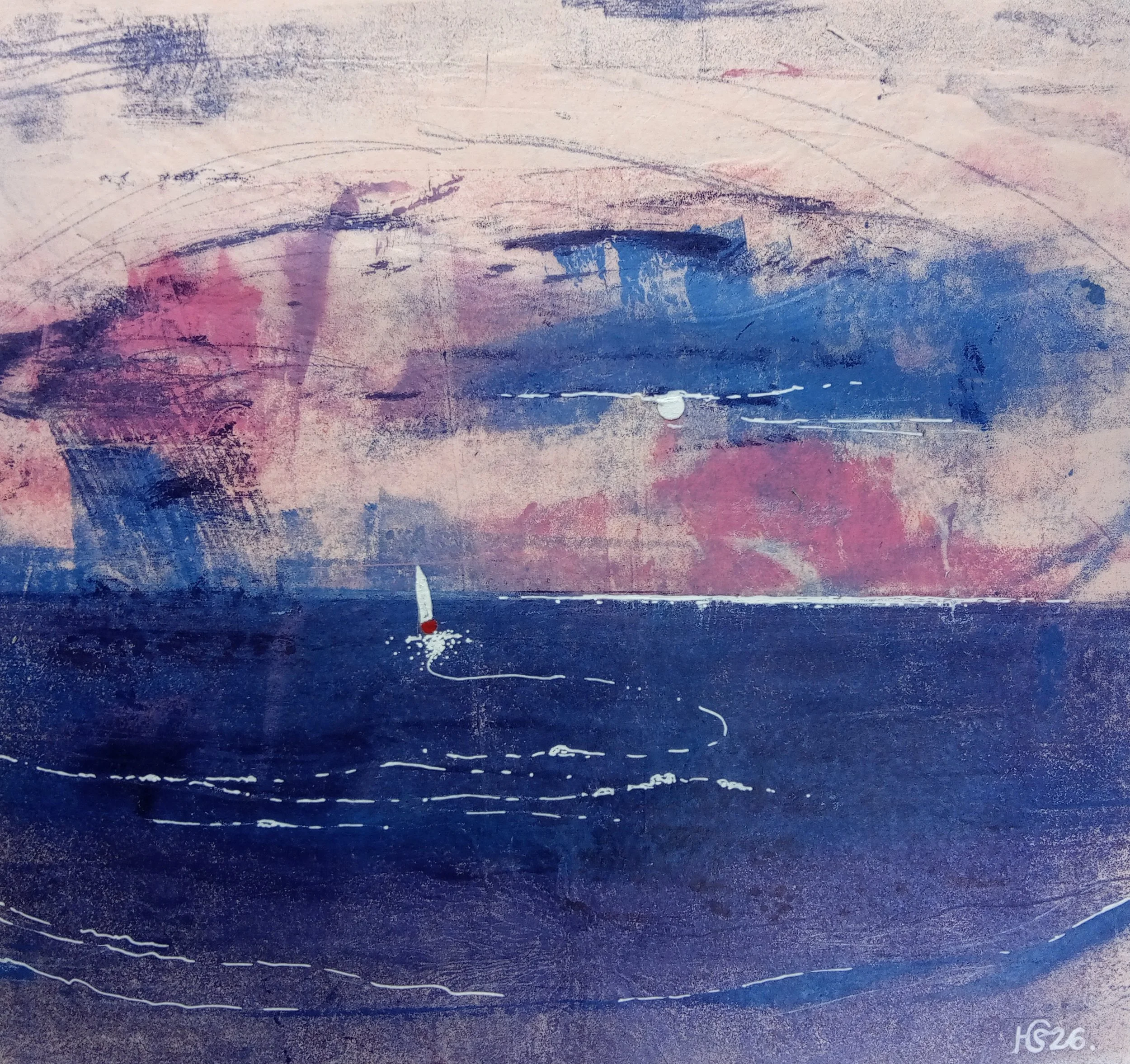
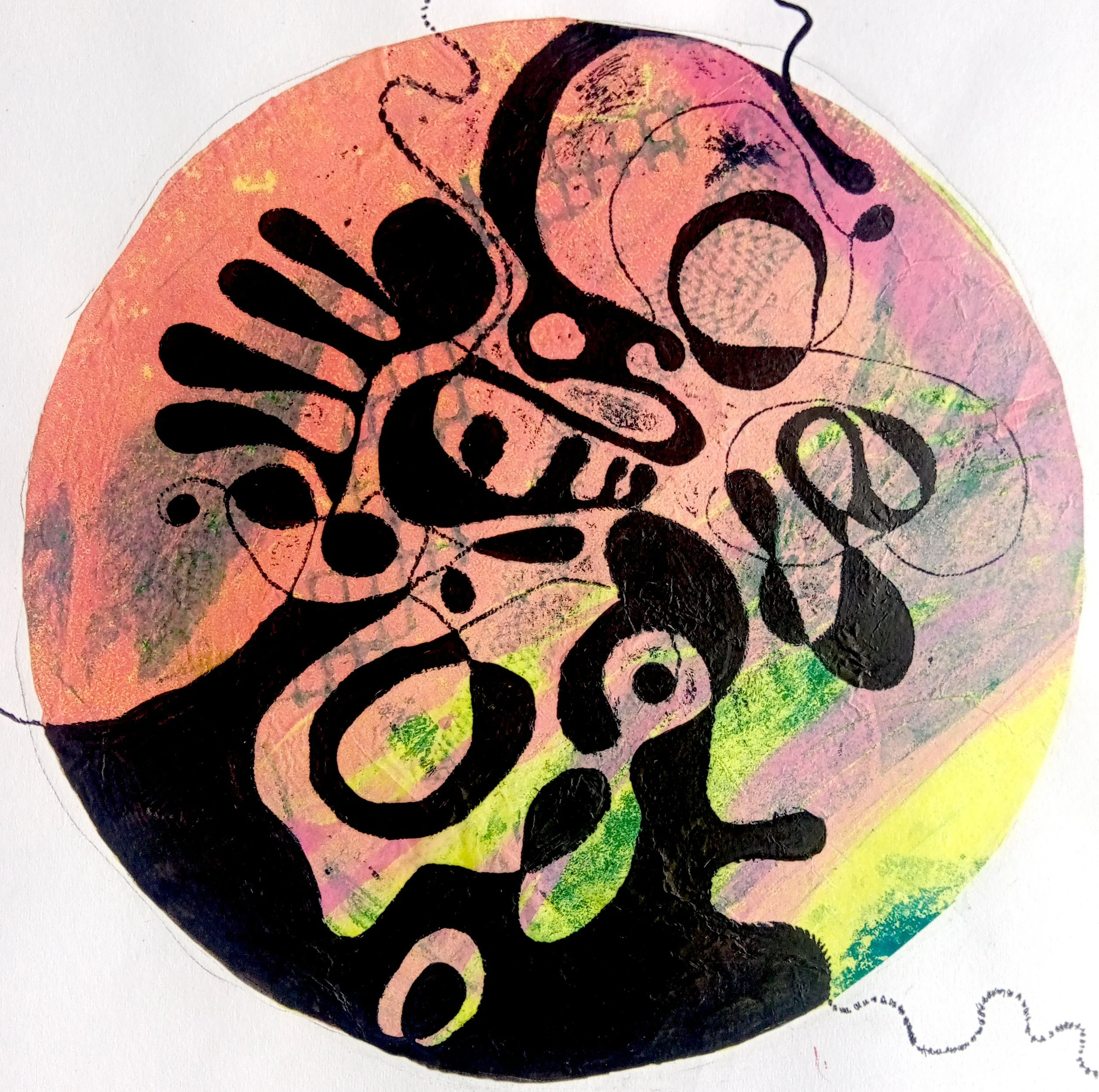
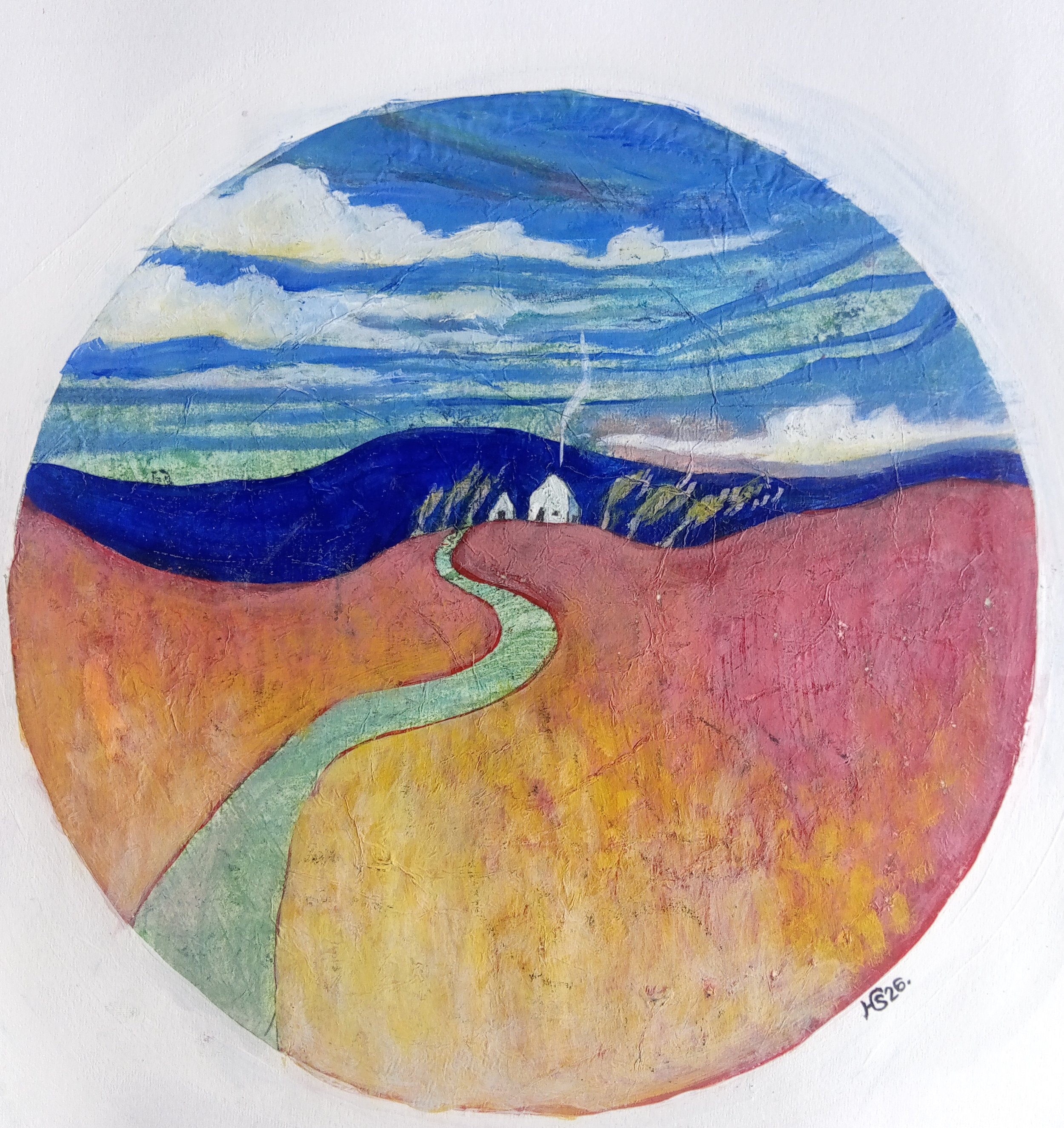
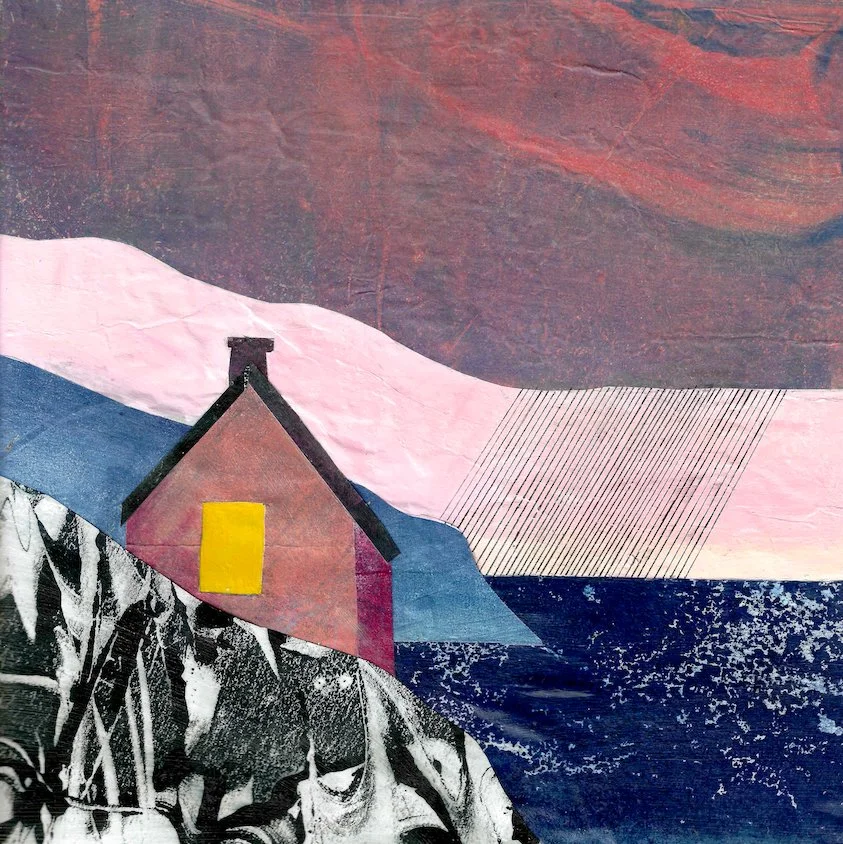


Framework
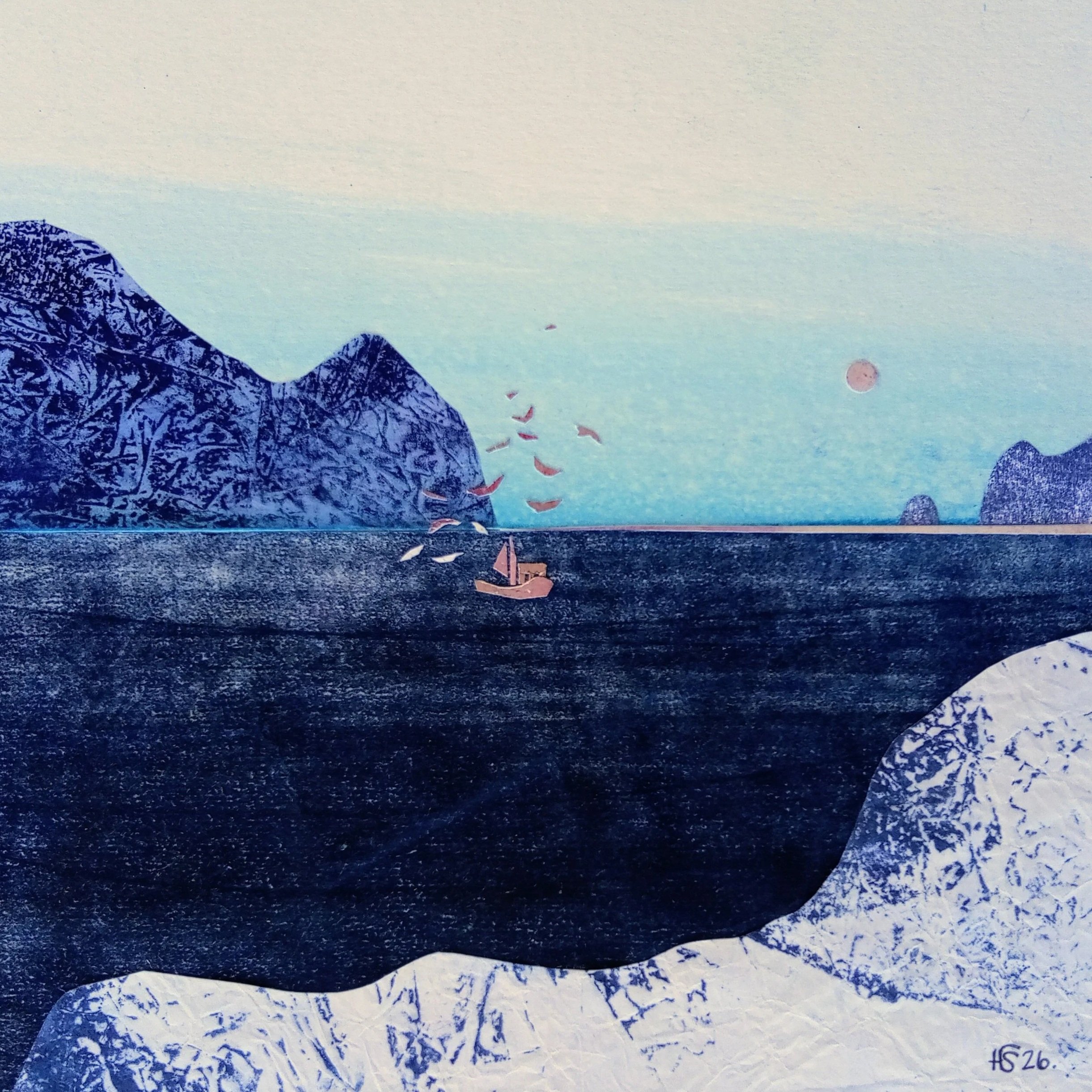
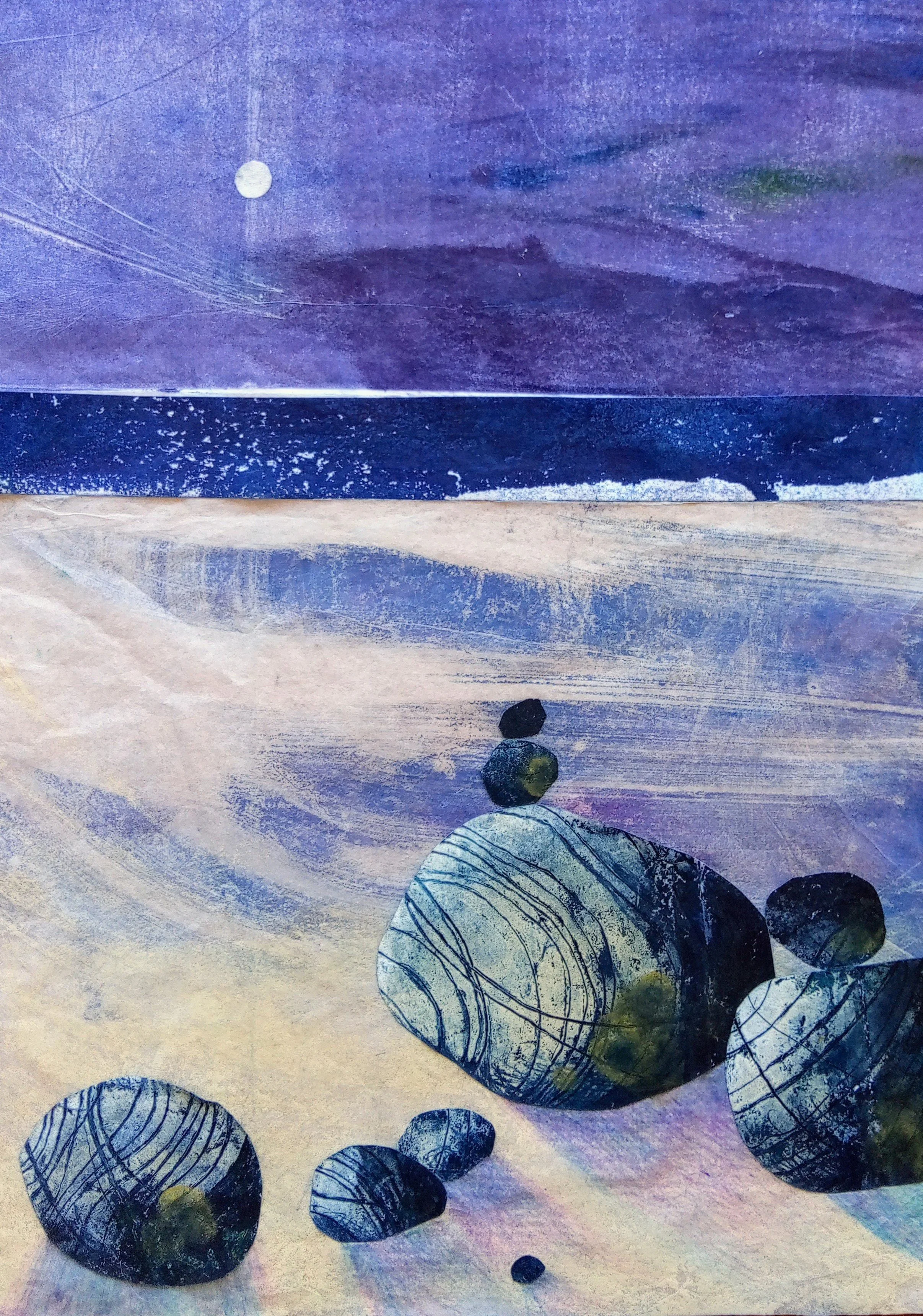
Creativity does not always require more options; sometimes, it requires fewer. Following the open, experimental phase of my "Monotype Explorations: 100 Directions" project, I decided to introduce some clear parameters.
Structure, skills and community through the Ruth Ander 8 week Hand printing happiness online course.
Technique: Monotype, collage, acrylics
Theme: Local landscape contrasts: Huge/tiny - Nature/human - Texture/solid - Calm/chaotic - Organic/geometric
How many works: 20
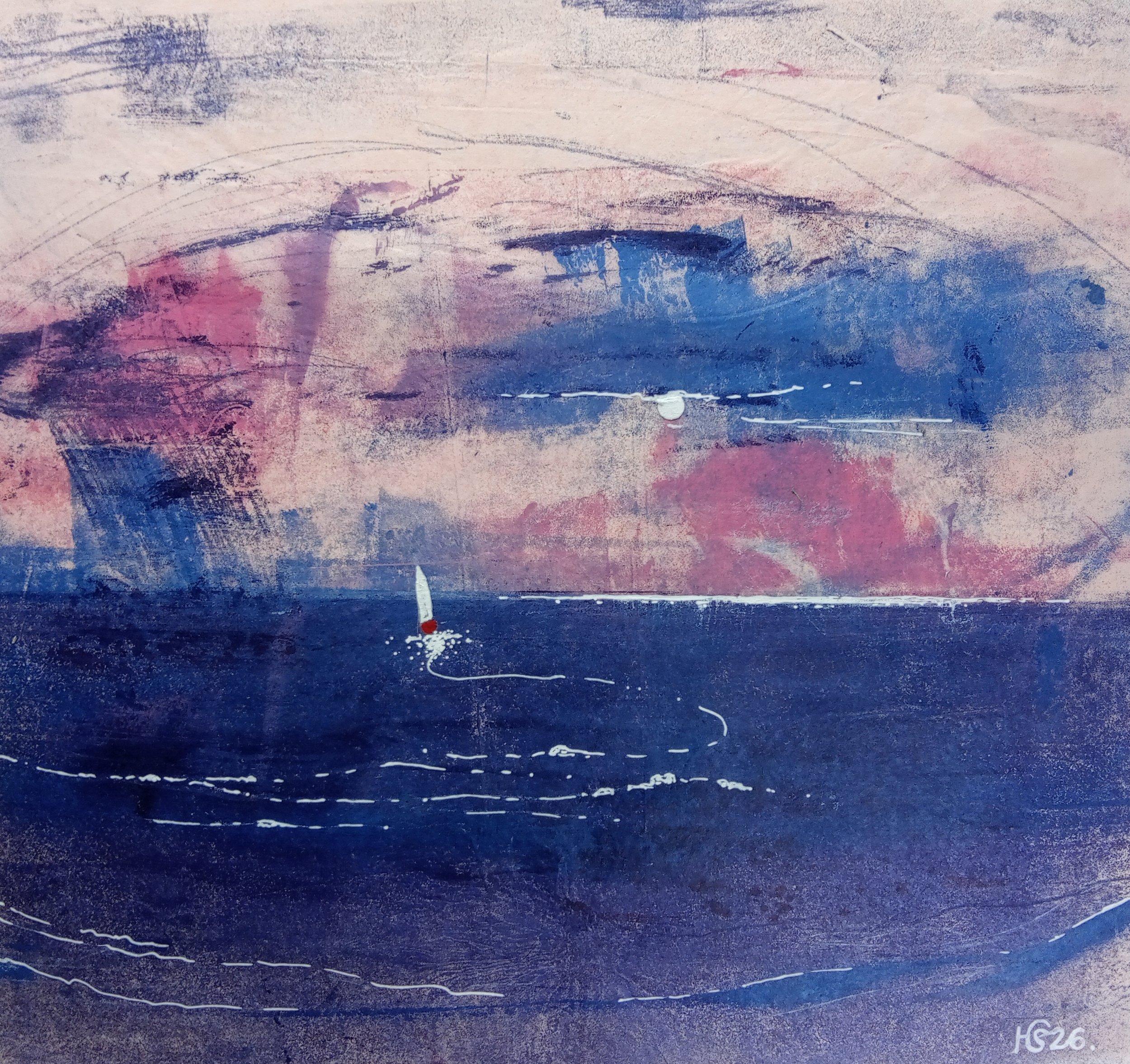
Monotype and collage experiment nr. 20.
Reflections
I have finished my tast of 20 experimental works. So what did emerge? I found a clear direction. I could explore variations within a defined framework rather than starting from scratch with every new idea. This opened up the possibility of using elements from previous prints as raw material for new pieces. A pile of past "mistakes" transformed into a collection of "opportunities." What didn't work as a standalone image could become an intriguing shape or texture within a collage.
This proved to be an exciting way to work for me: a clear structure that still allowed room for surprises. This also translate to professional design, a natural part of the profession: responding to a clients problems and needs: parameters—such as format, color palette, target audience, or messaging—can thus serve as catalysts for creativity rather than mere limitations.
Good findings:
Marketability: I have sold 9 out of 20 works.
Completion: I finished what I set out to do. This builds grit and self-trust—the ability to endure the reality of the process behind an initial vision.
Skill development: I honed my craft, gaining a deeper understanding of the possibilities of the monotype medium. As an example I now know I love using tissue paper for its subtle nuances and fine detail.
Serendipitous nature of monoprinting; you never quite know what the final result will be. I found that i am quite creative with finding potential from the unexpected, creating something interesting from pieces put together.
I can improve:
Color. Some works became a bit dull and dark. I would like to hone my color skills in a more focused way. How I am not sure yet, maybe this is my next framework?
Patience. I constantly find other ideas and things I want to explore, instead of going deep. Once I have learned a technique I get bored and also start to doubt the work. I guess I can't improve actual impatience, it is what it is. But I can practice being less responsive to it. What does it mean? Do I need to change the framework to better meet this side of me? Or that I focus more on sticking to a framework?
Mounting. I sold a work that had not yet dried fully. I thought it would be fine as it was protected by a frame. The customer did not want the frame, so I hope the print survived his journey home. I need to learn more about seal and mount a work professionally.
Perfectionism. As much as I wanted to let go of this, I couldn't. I still obsessed (for hours!!) over tiny details in the works. It is good to become aware of it, as I can then recognize it when it starts to happen, and keep on challenging it.
#designprocess #creativeframework #creativity