
Painting commission
The freedom of an open commission is terrifying. How to move from a blank canvas to something someone else loves? I log this commission to reveal the process.
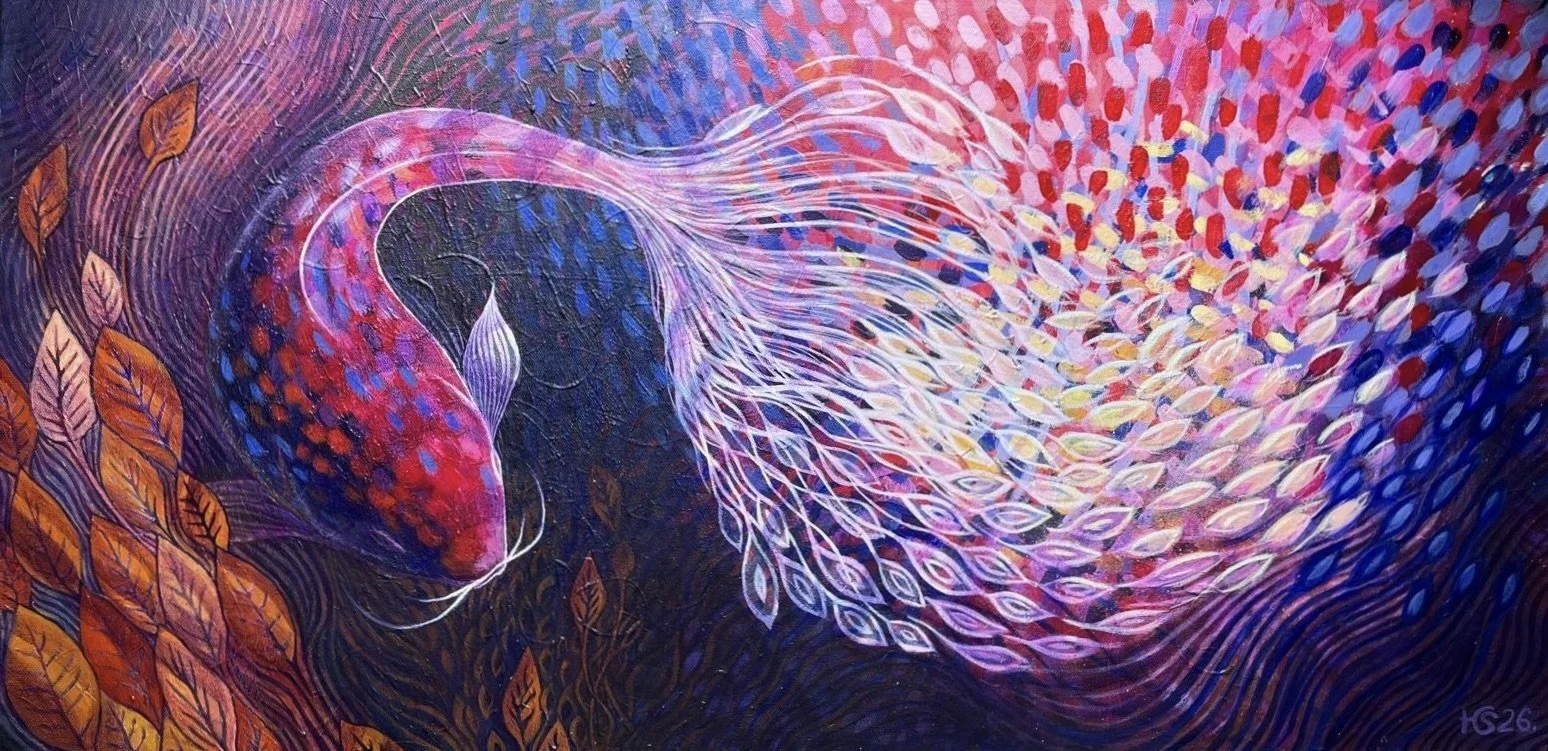
“Ebb and flow”
Acrylic on canvas, 100 × 50 cm.
Step 1 - developing the idea:
Step 1 - Developing the idea / Step 2 - Start doing / Step 3 - Finishing
19.02.26
Mia says she likes my style of painting, and want me to come up with something. This kind of commission is an open ended road, and the questions always lingers: will the client like it? Will I manage to be authentic or a slave to the clients imagined taste? Where do I start?
Ask client to send examples of my work that she likes
Ask about other preferences, like color, theme and size. Requests were a large painting, bright colors and nature.
Can I make it personal? I looked through some photos of us from last summer. In Mias balancing between her own wants and needs with motherhood, there will always be a tension. For me, that long, strong hair thrown back in this photo represents the energy I see in her. Could this be a place to start?
Manipulate photos with AI to test idea/create painting references.
Find inspiration online.
Sketch first idea based on the above.
Recognize my own intuition
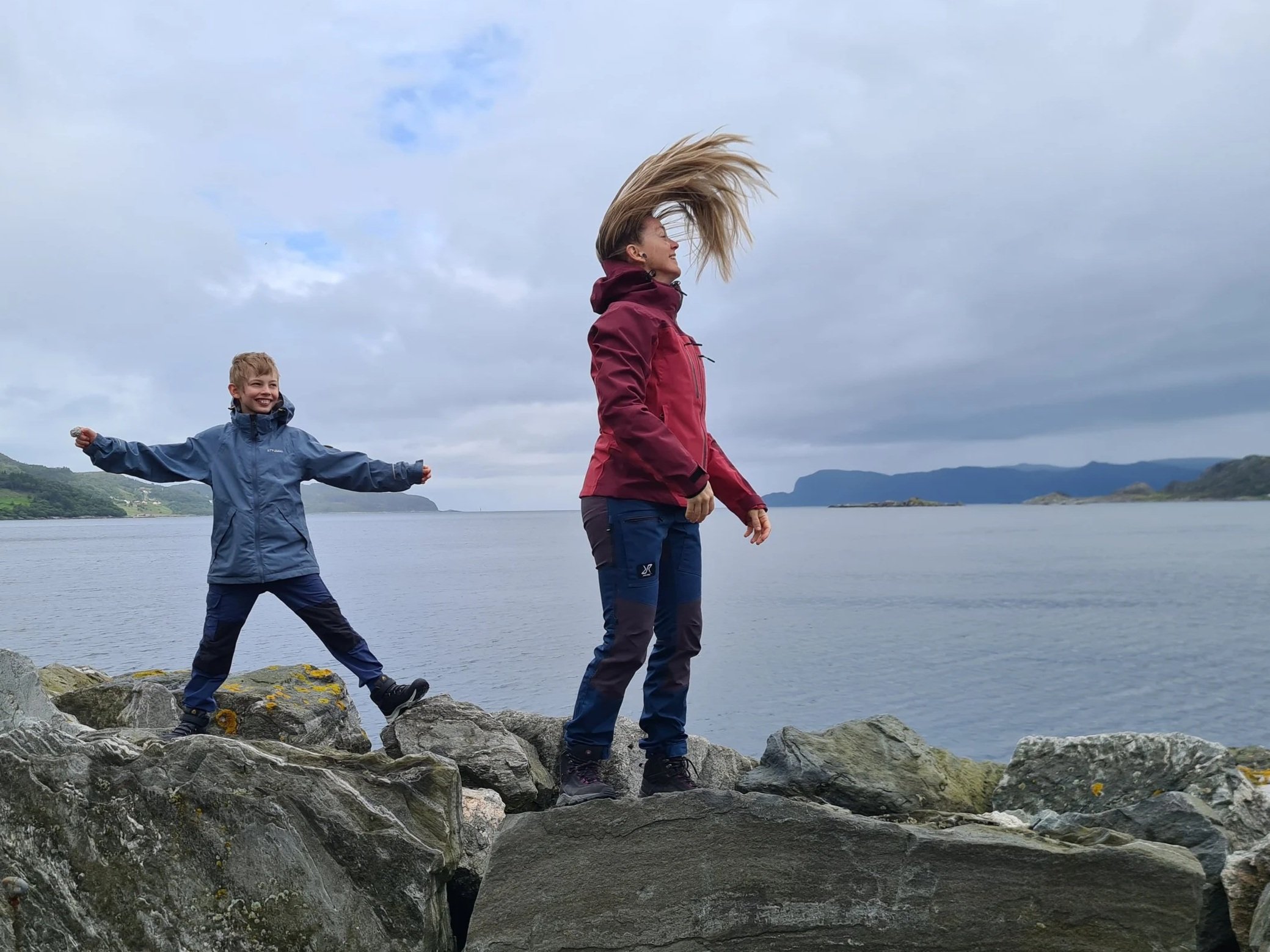
Photo of Mia and her son Erik

AI manipulation of photo: backlight
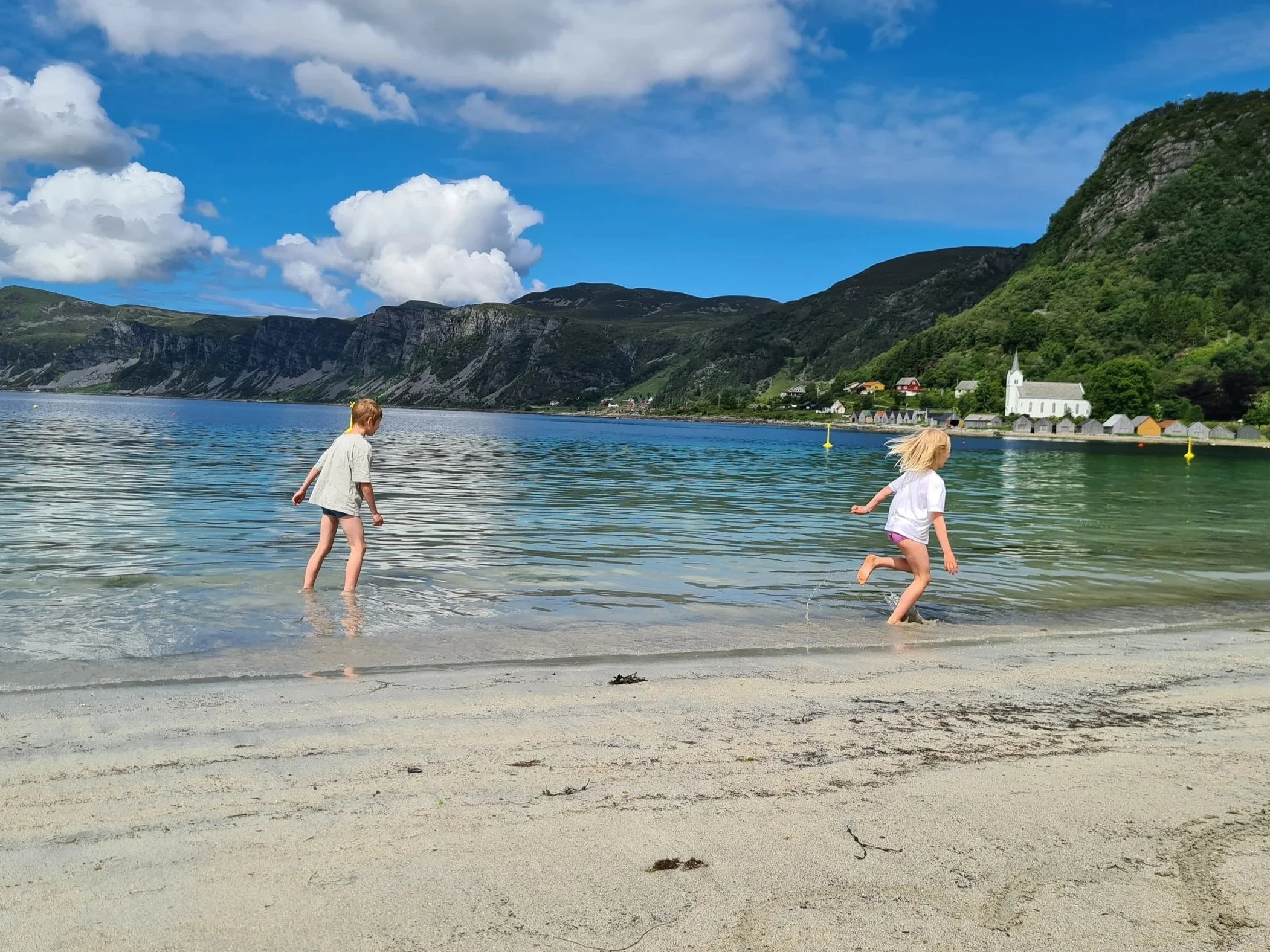
Mias children, 2 of 3, Erik and Hile. Sigurd is missing
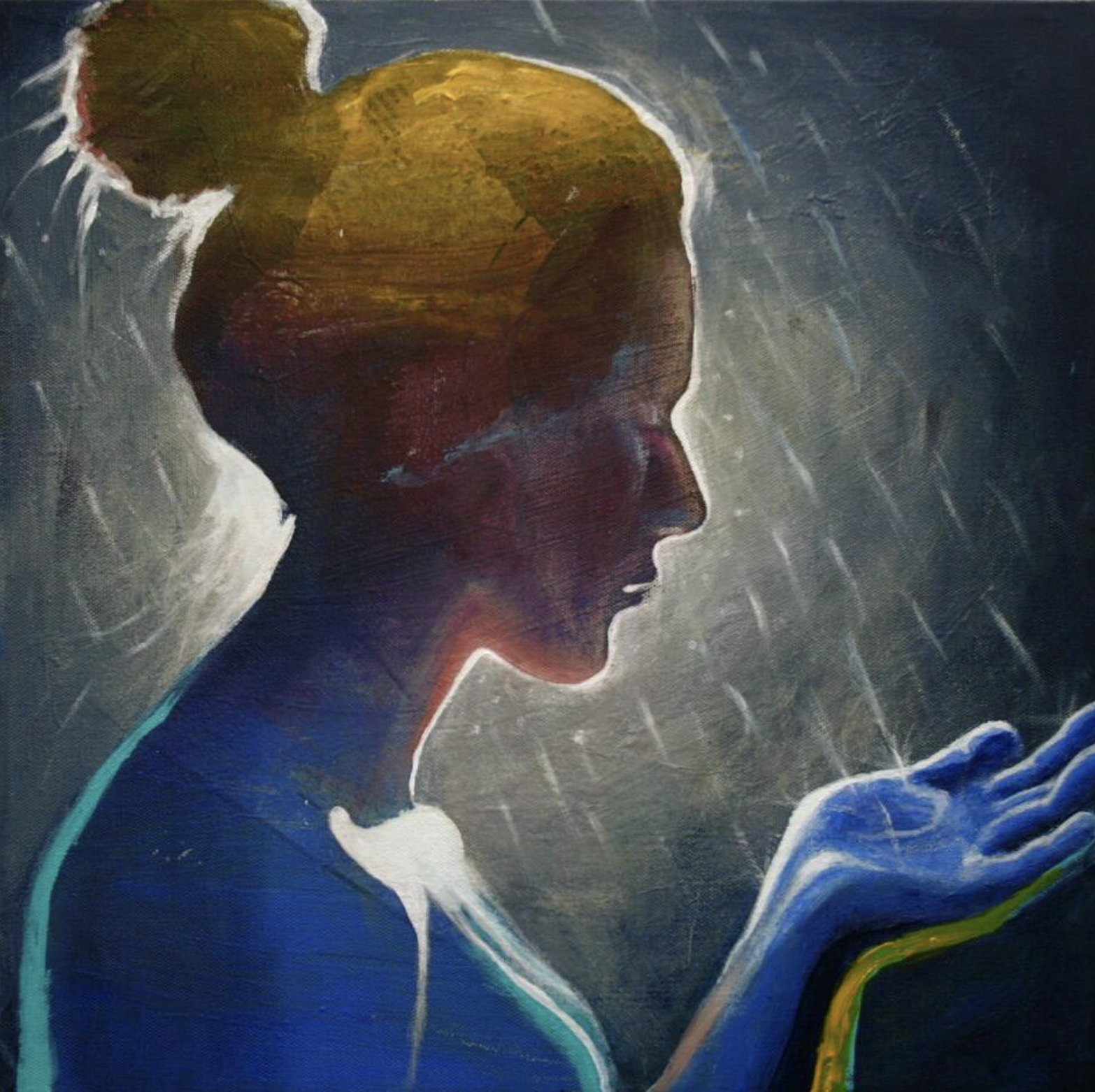
One of my previous paintings, Mia likes the back lighting
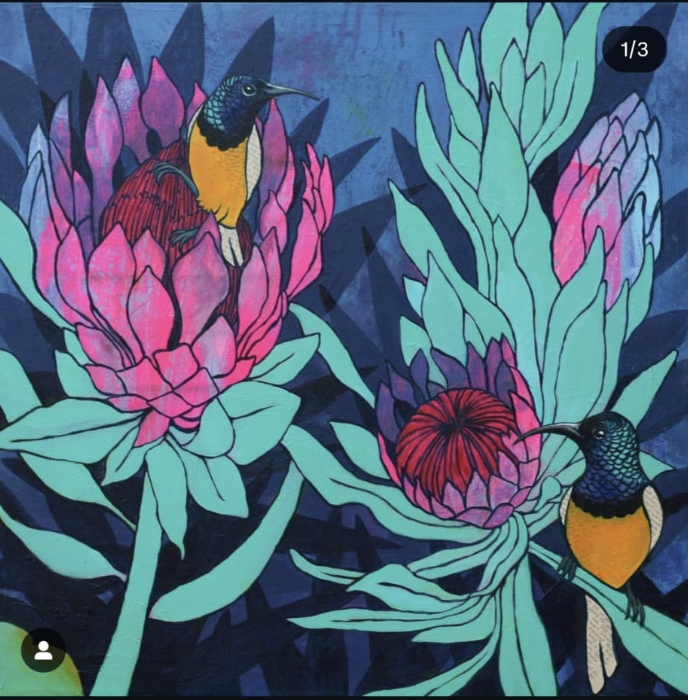
Previous commission, Mia likes the colors and plants
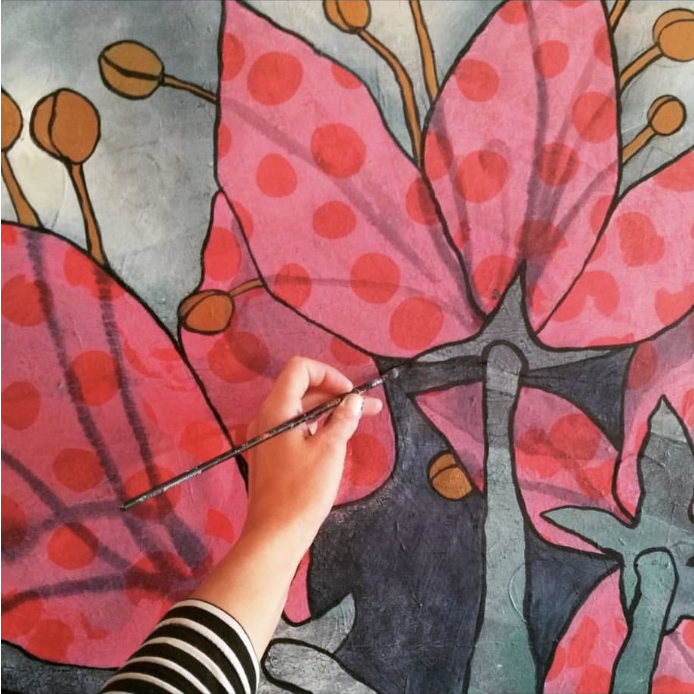
Personal project, Mia likes the florals and bold style
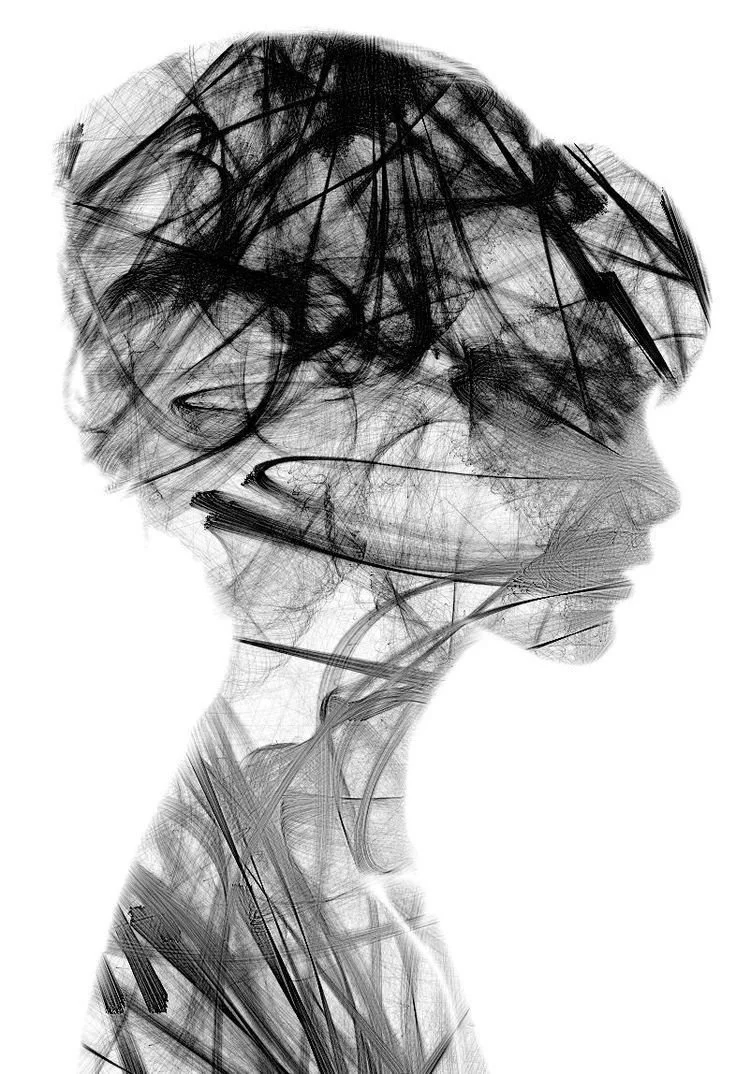
Inspiration: Image: unknown via pinterest
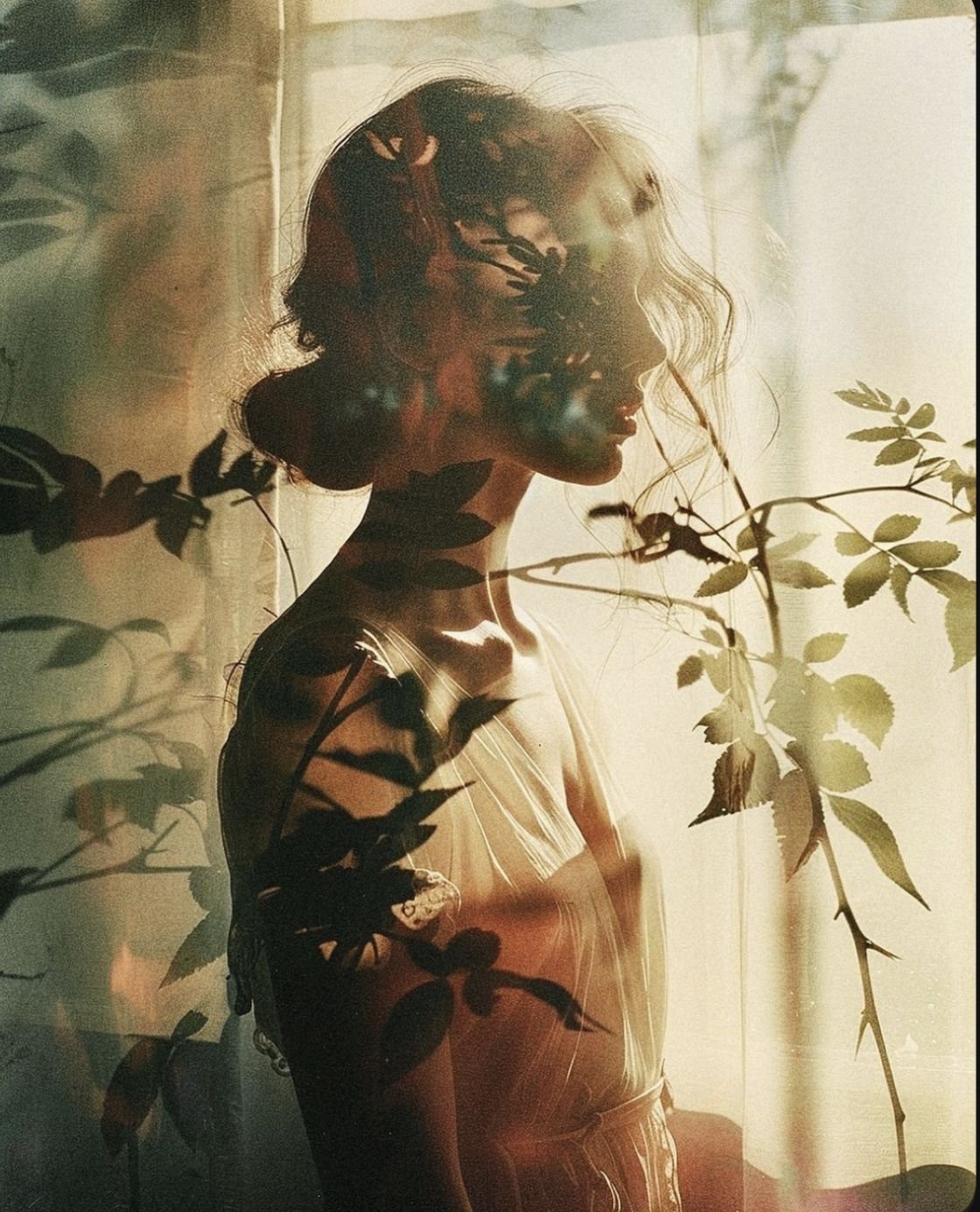
Inspiration: Image unknown via pinterest
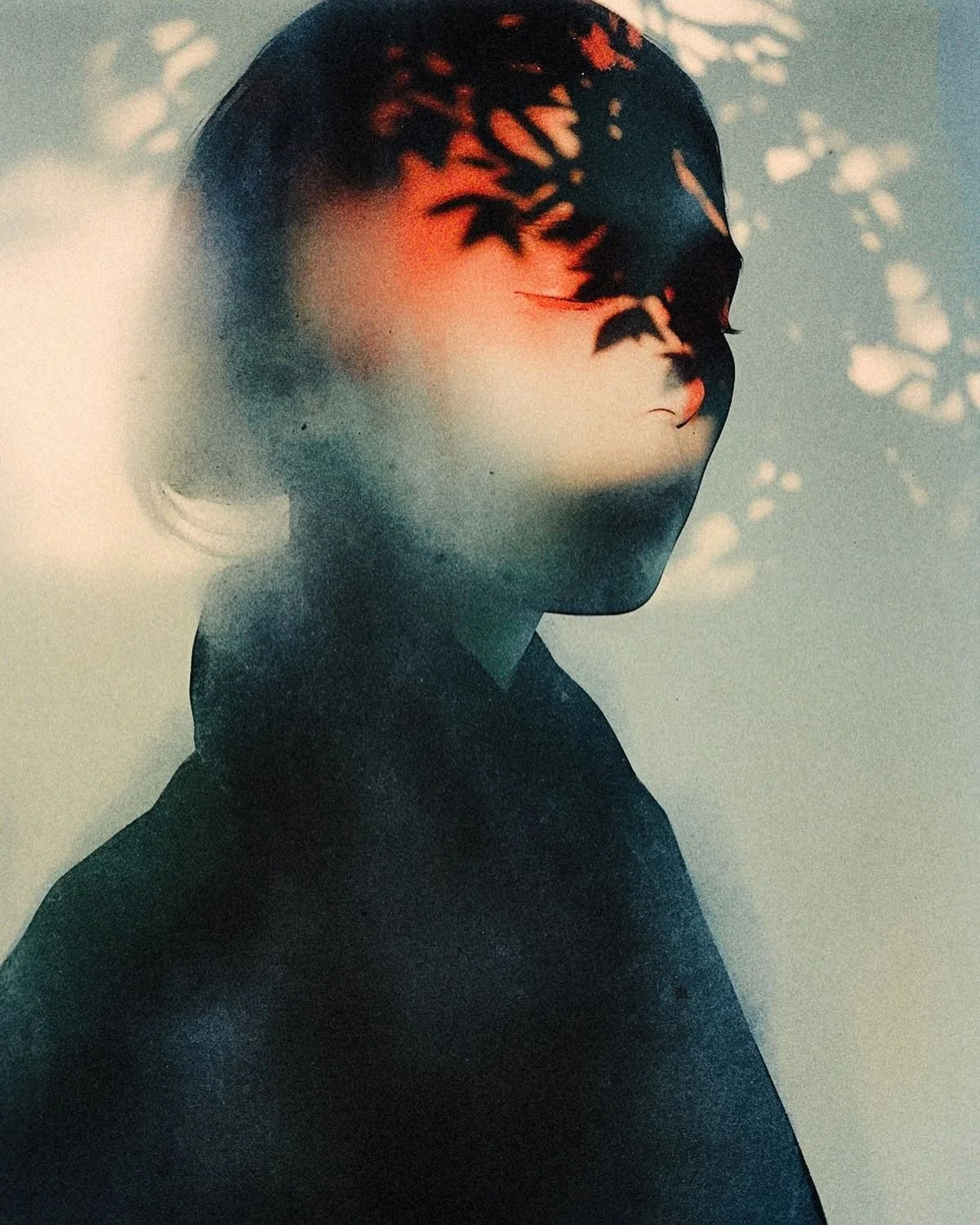
Inspiration from Caspar Jade. Inspiration isnecesarry, but needs to come from several sources, including myself for it to become mine.
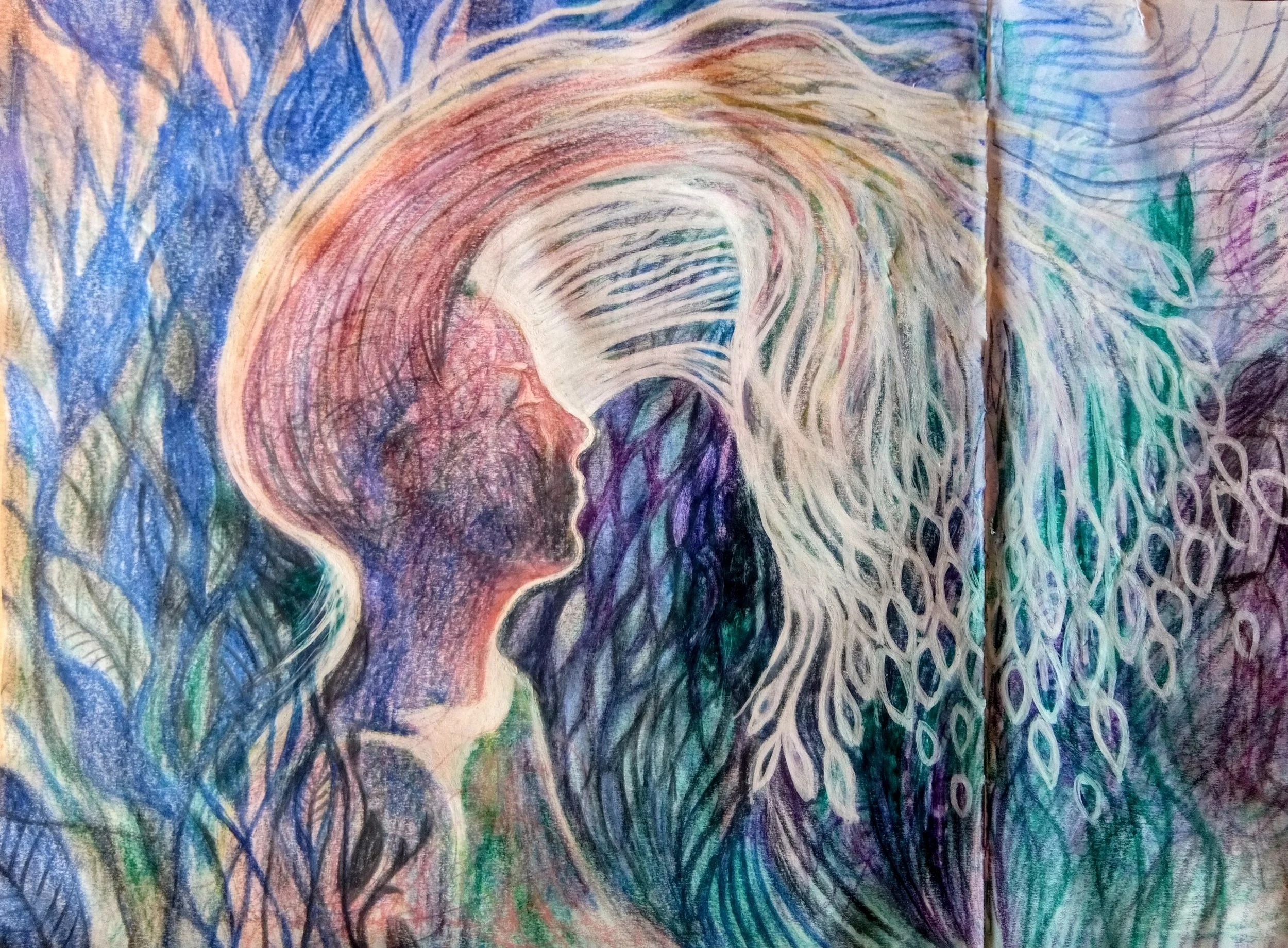
Idea sketch. I like the nature pattern theme, natura naturans. Not sure about the hair.
Step 2 - Start doing:
Step 1 - Developing the idea / Step 2 - Start doing / Step 3 - Finishing
“Every new piece of information addd another reason to keep thinking instead of doing. I was planning my way around a decision I was scared to actually make.” - Alex Mathers
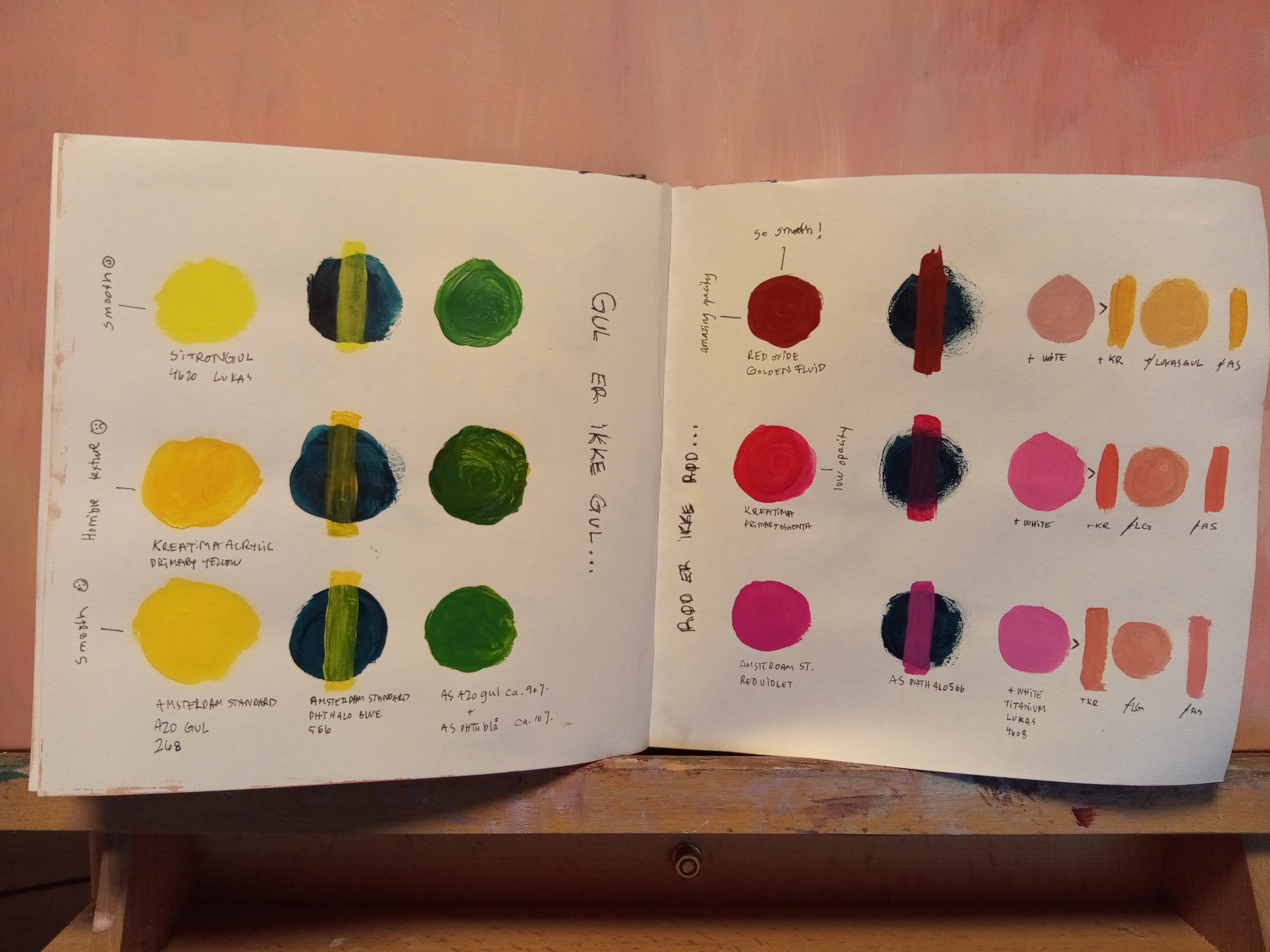
Testing color mixes. I want to do this with primary colors for a harmonic color palette. Different opacity with different brands. Golden fluid has great coverage.
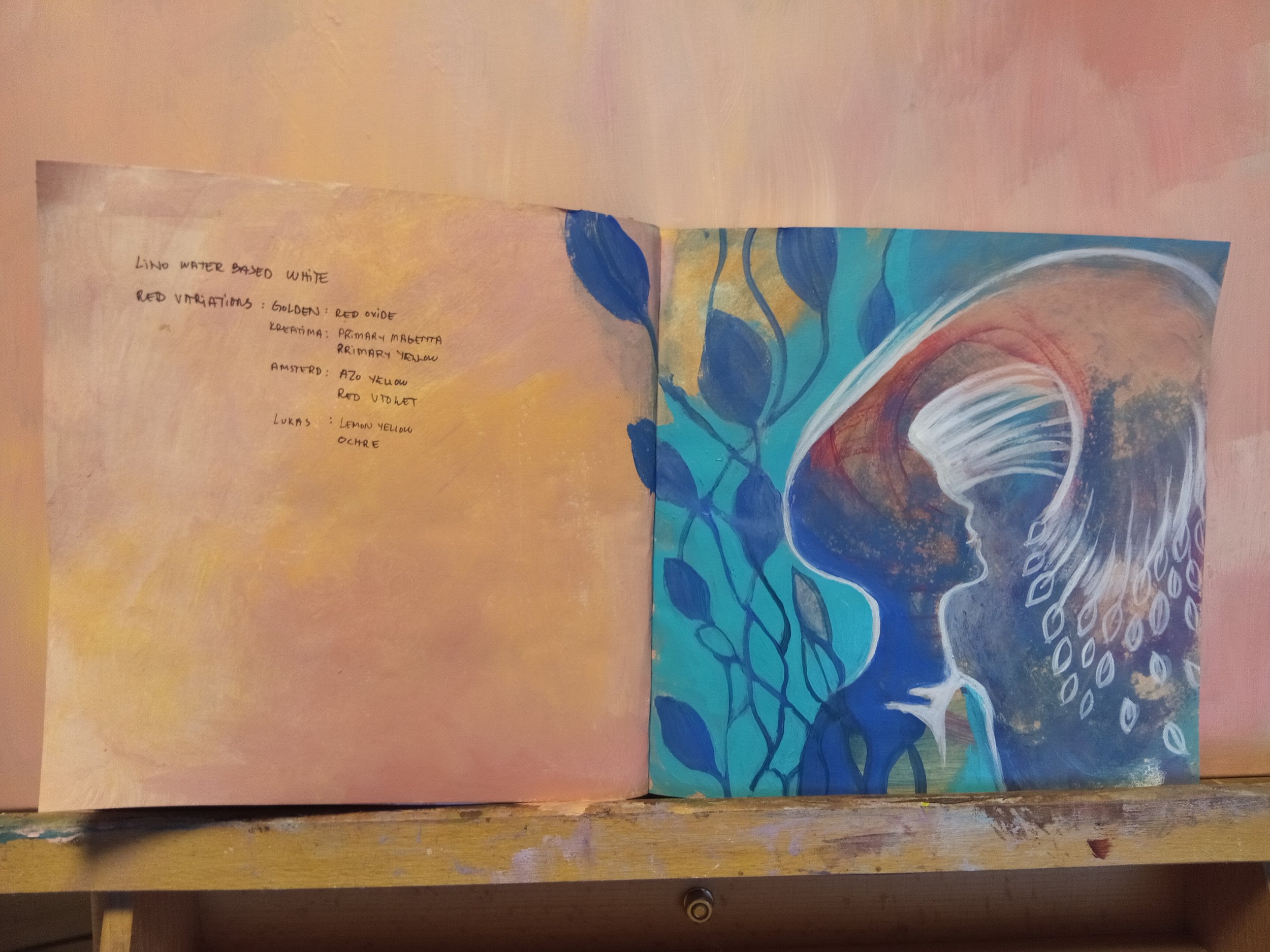
Testing backlit hair with acrylics. I hate it, it looks melodramatic. Perfectionism or true vibes? I might have to kill this darling. I like the plant though, overpainting with lighter over dark background.
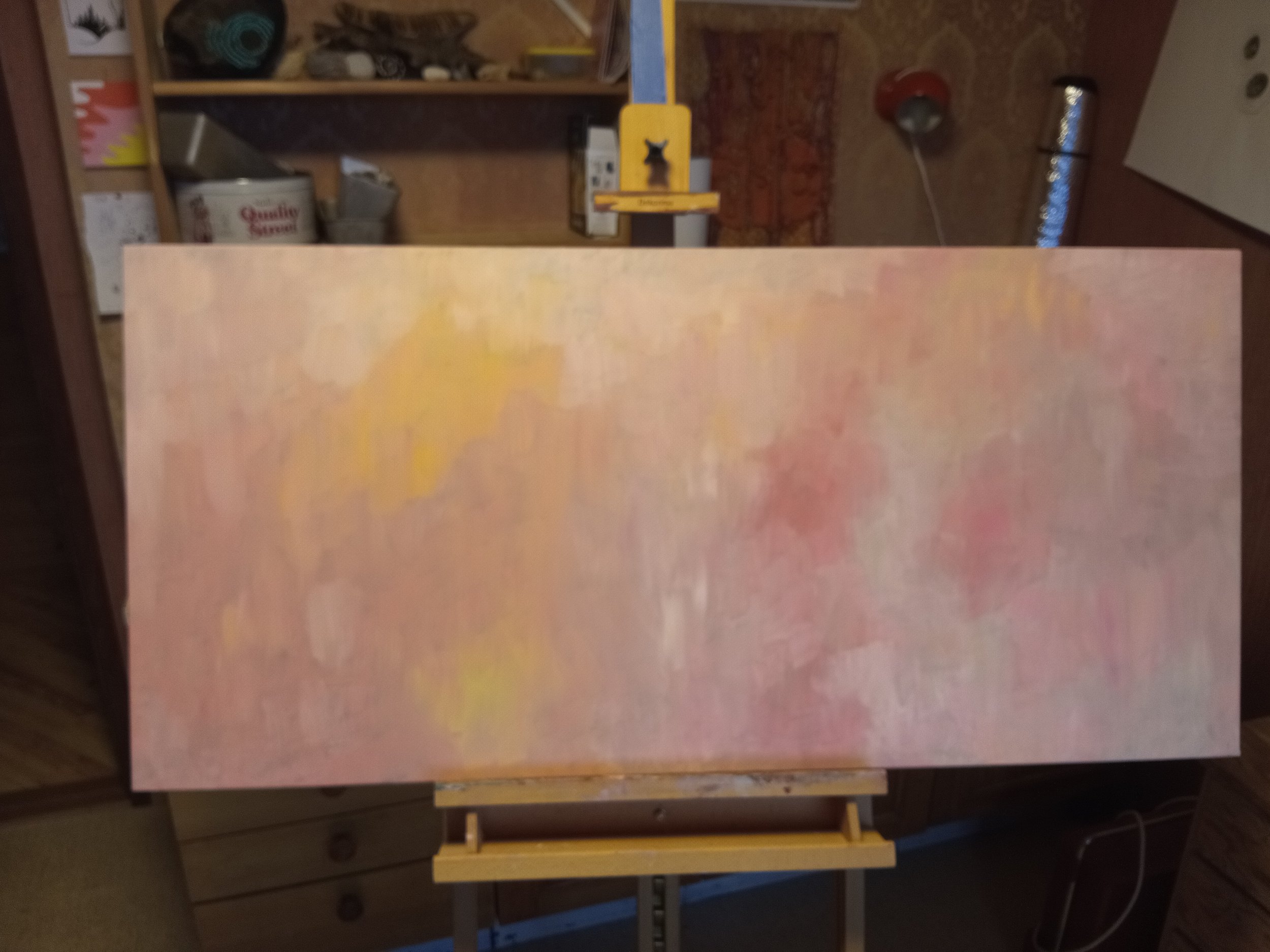
Background, light and warm atmosphere. With a large brush and short dabbing strokes i create color variations.
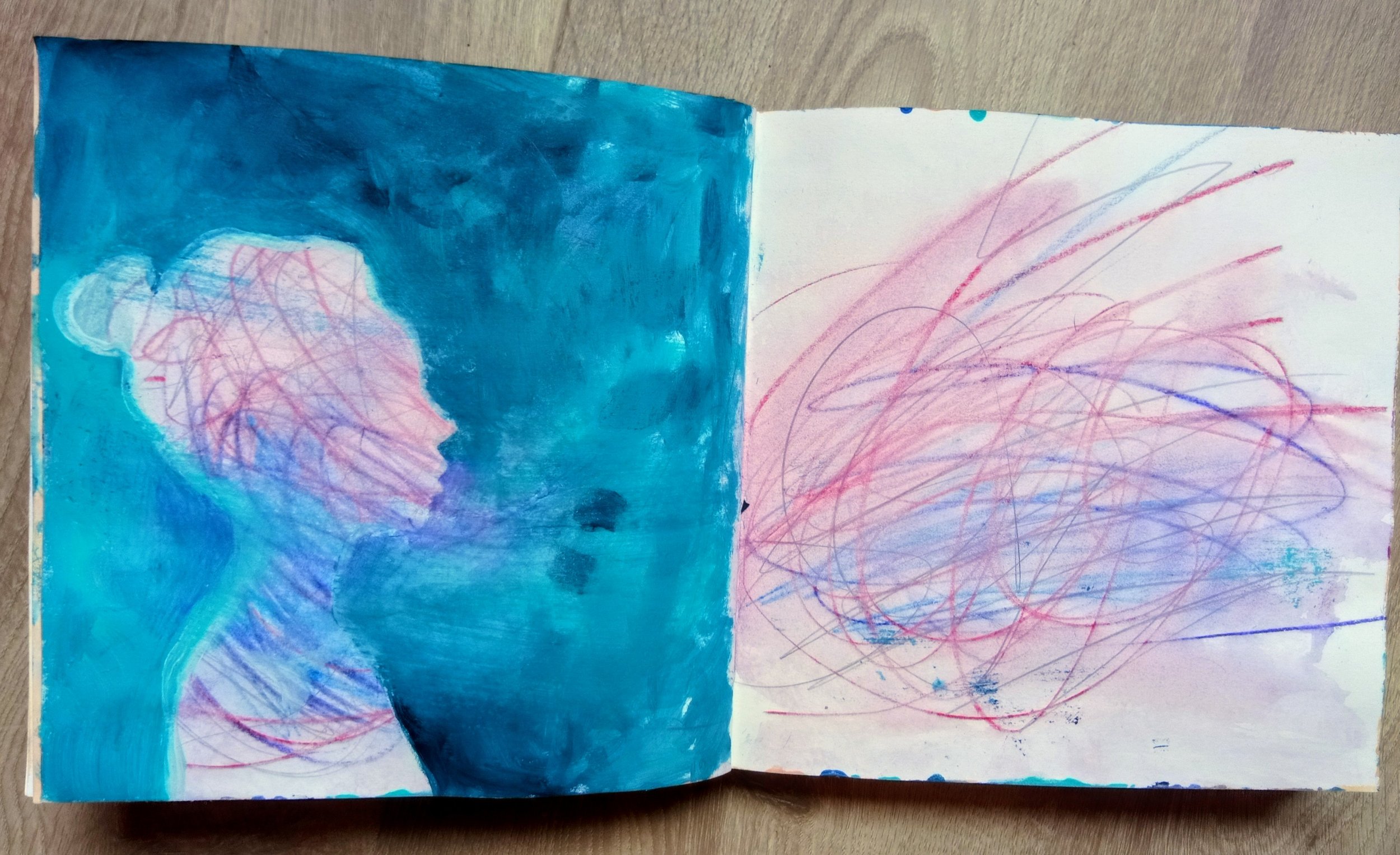
I like the energetic lines inside the head shape here. Created with water color pencils
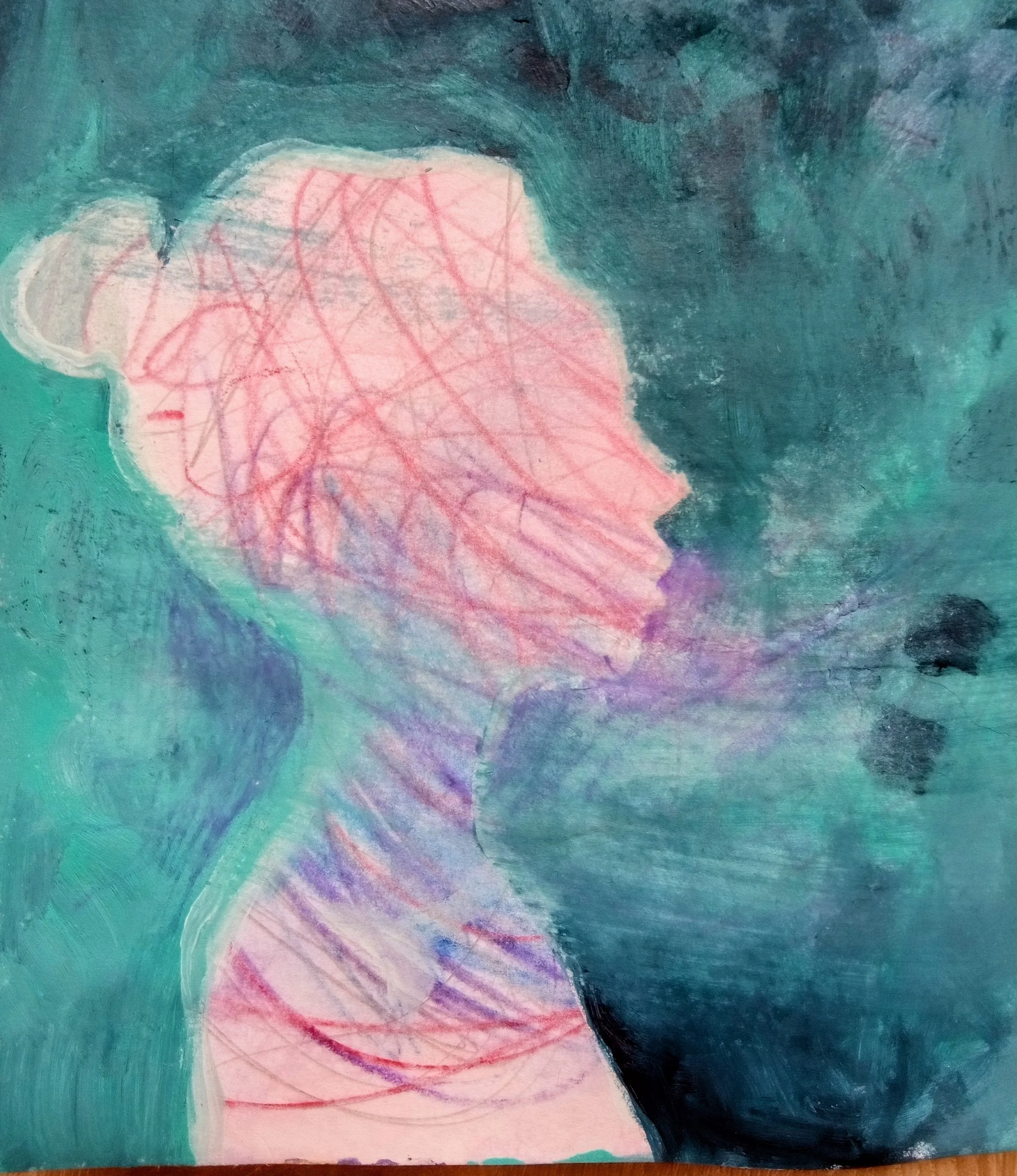
The "wind" feeling is good, the lines extend the head shape. Is it still mine? Is it still Mia?
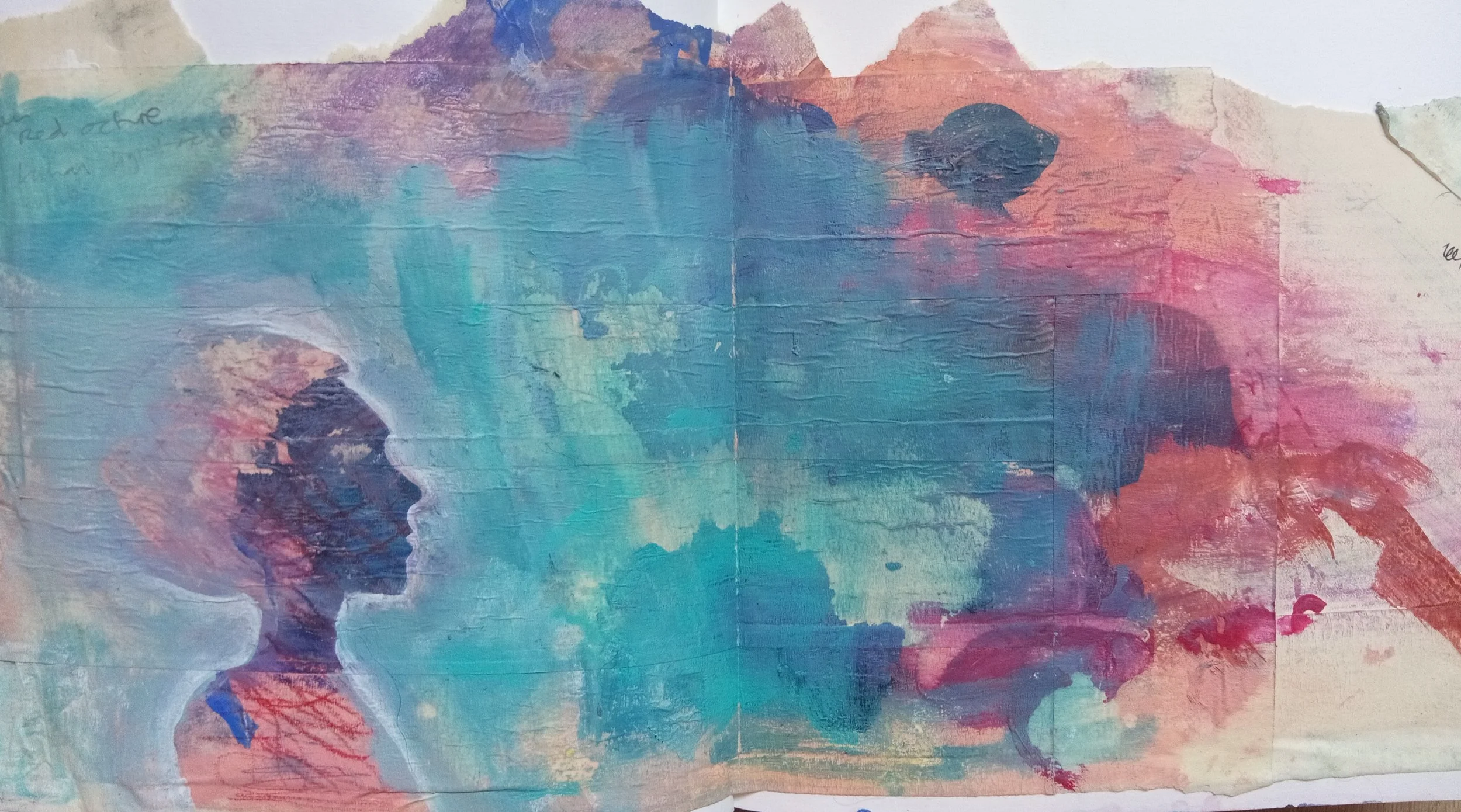
Coincidental background vibe from my palette.
Taking process images is not easy
Norma requires constant attention
Time for a walk
24.02.26
Don’t try to think my way forward, paint, test, play.
Test with the material I want to use. What worked really well with color pencils might not work with acrylics. Every medium offers it’s own magic. Play with it to find it.
Kill my darlings. I might kill the hair idea. In acrylics I get these wolf in moonlight or moose in sunset vibes. So melodramatic! Great to use as a starting point, not necessary to hold on to.
Paint the canvas in a background color. I can change it if I don’t like it, this is the beauty of acrylics. Paint on canvas offers momentum to keep exploring.
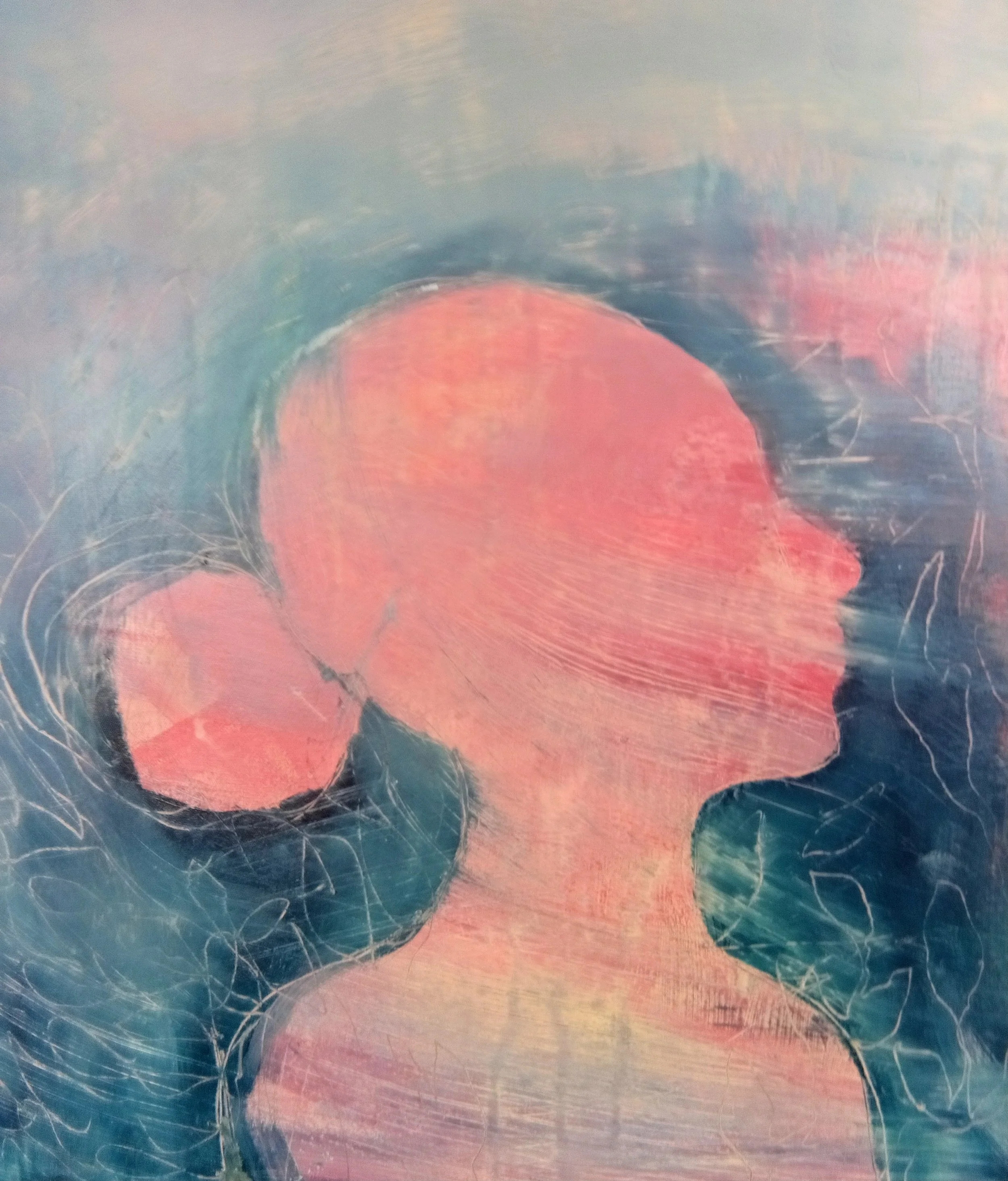
Learn from mistakes and start again
I printed out and painted Mias profile onto the canvas to try out a the Caspar Jade inspired idea of energetic lines inside the head shape. For the base cover I had mixed water based block color with my acrylics. I had a huge tub of white, I thought it would be economic, as i had a large canvas to cover. But, the white block color reacted to the moisture in the acrylics, in spite of being completely dry. When a new layer of acrylic paint was added, it rehydrated with the painted layers and created mud.
My canvas was covered in block paint, so i had to start from scratch. As my 17 year old nephew said, it’s done, learn from it and move on. This meant that I had to get hold of a new canvas and start again, this time using a white acrylic color. This however, started a different approach to the background, as a new approach to the painting process had come my way in the meantime:
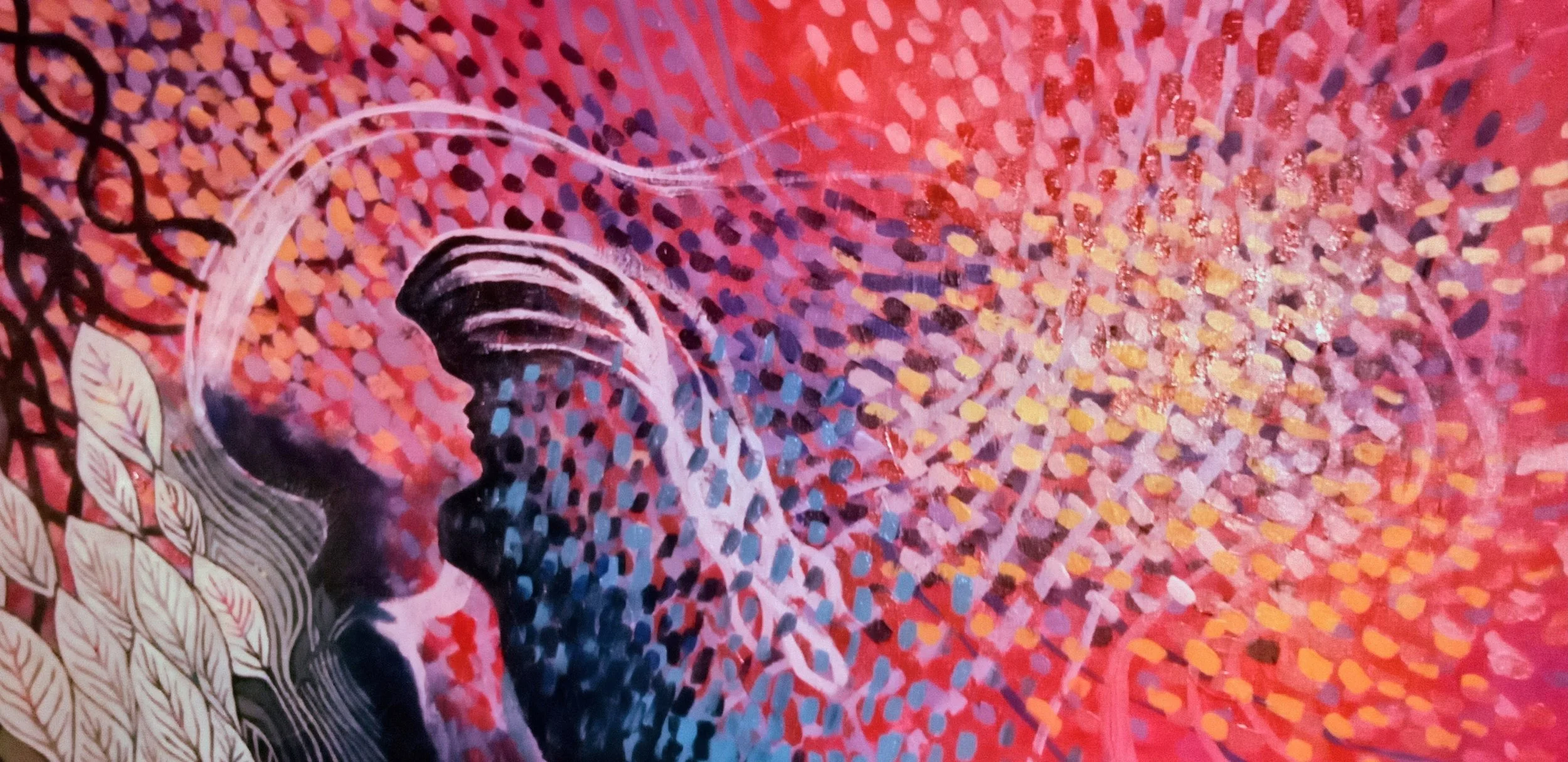
Starting with an abstract background, adding the initial sketch on top. I got inspired by a Flora Bowley paint session, keeping it loose and non judgmental for the background. It is hard to start painting intentionally on top of the very expressive marks.
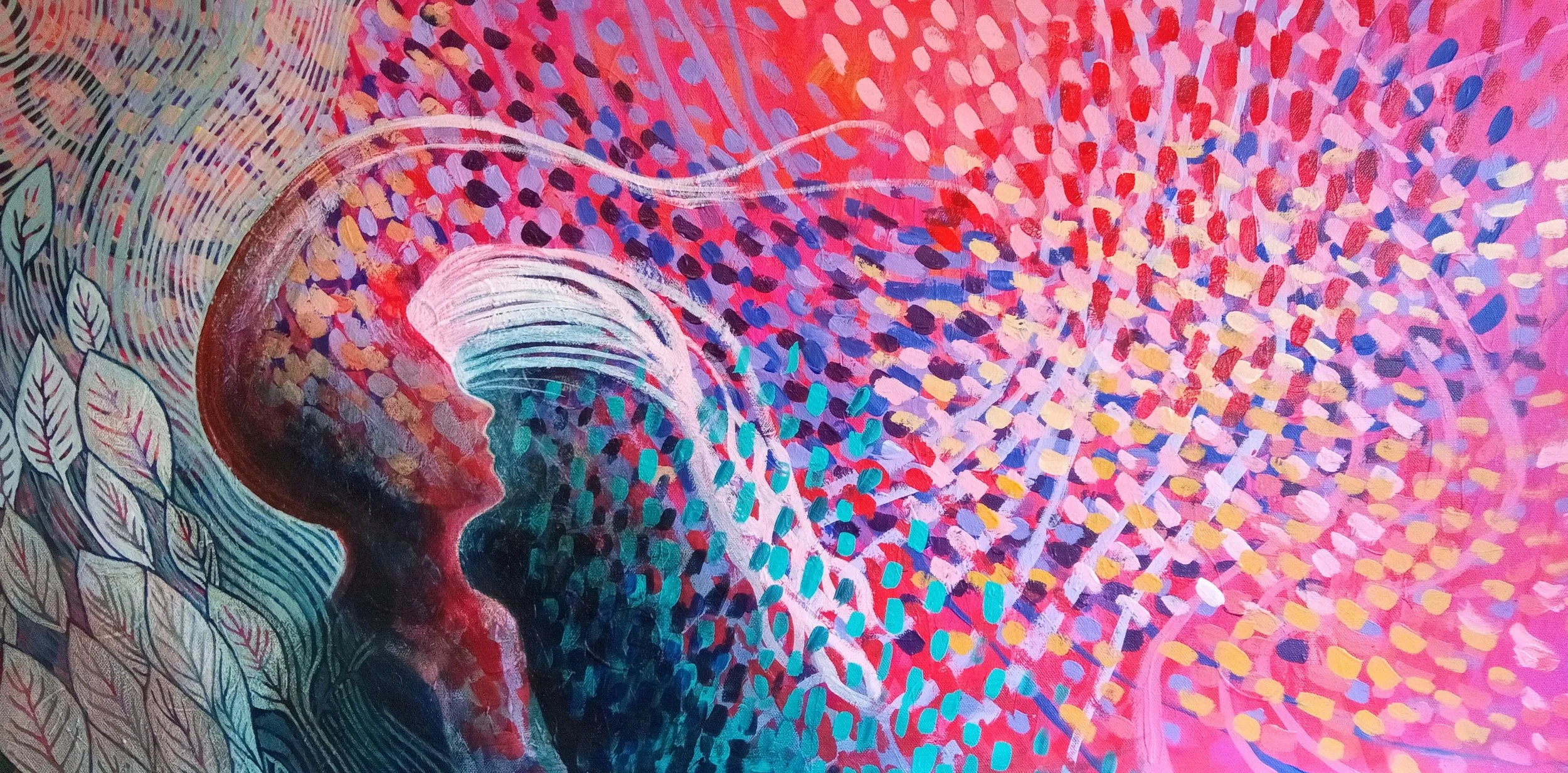
Why is it hard? I get scared of losing serendiupitous "accidents" that I like. But with acrylics, you can re-create again and again. Changing the colors, adding more lines in the background.
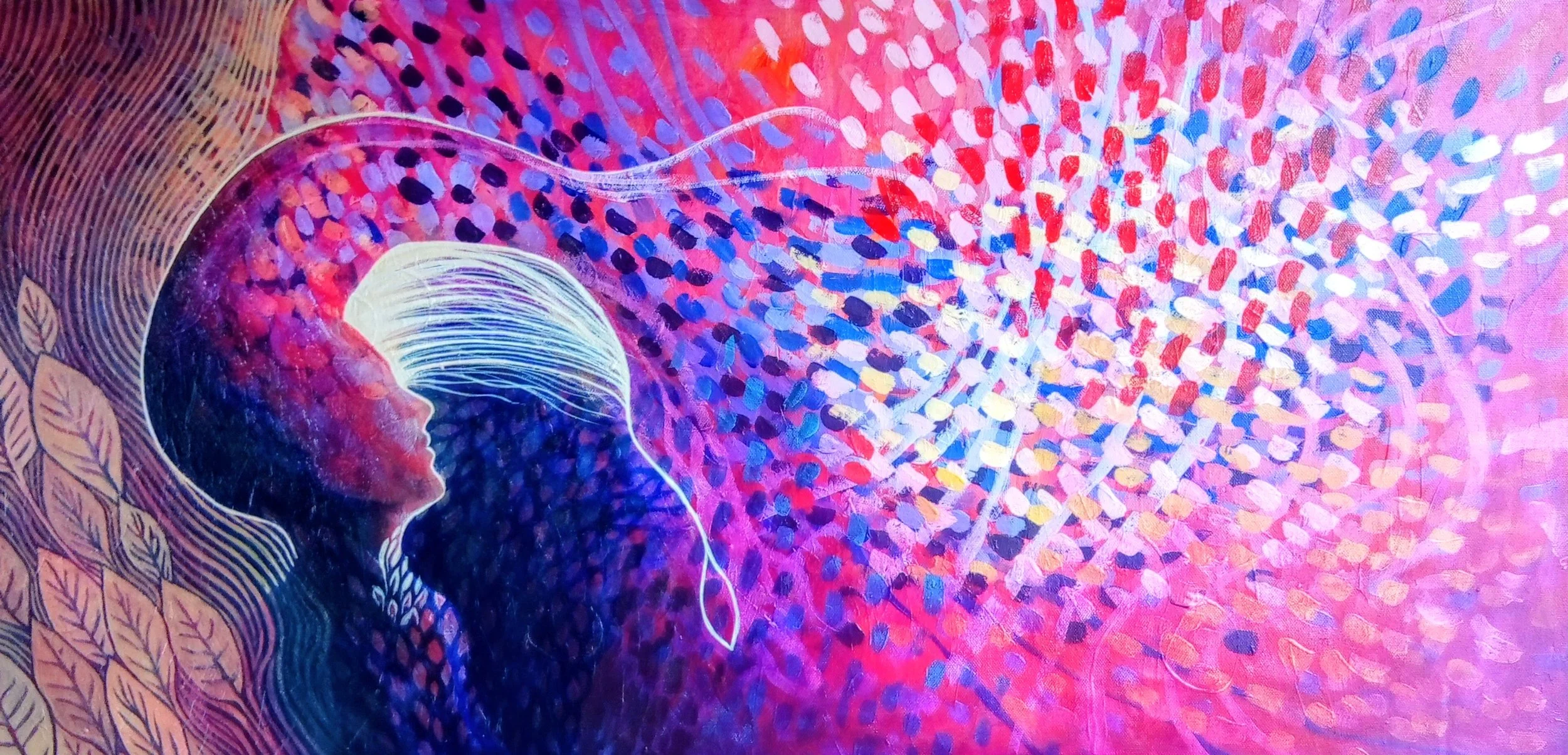
Toning down the green, now a more harmonic color palette. Using a 80/20 rule from Flora Bowleys workshop, of calming down a large part of the canvas but leaving some untouched.
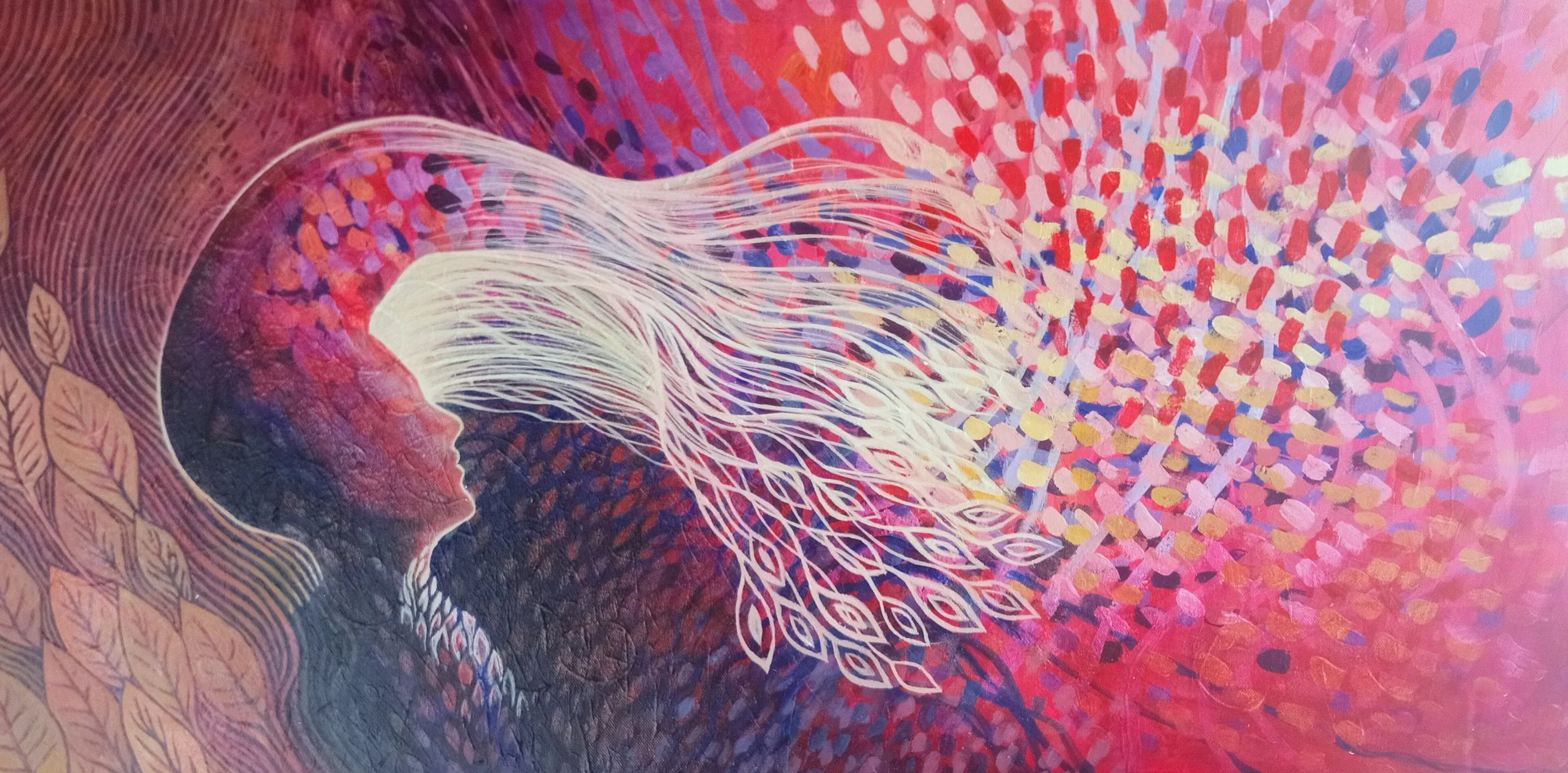
More toned down, more details. But I feel stuck. Something doesn't feel right. Like there is a tension in the painting that shouldn't be there. I keep adding tiny changes.
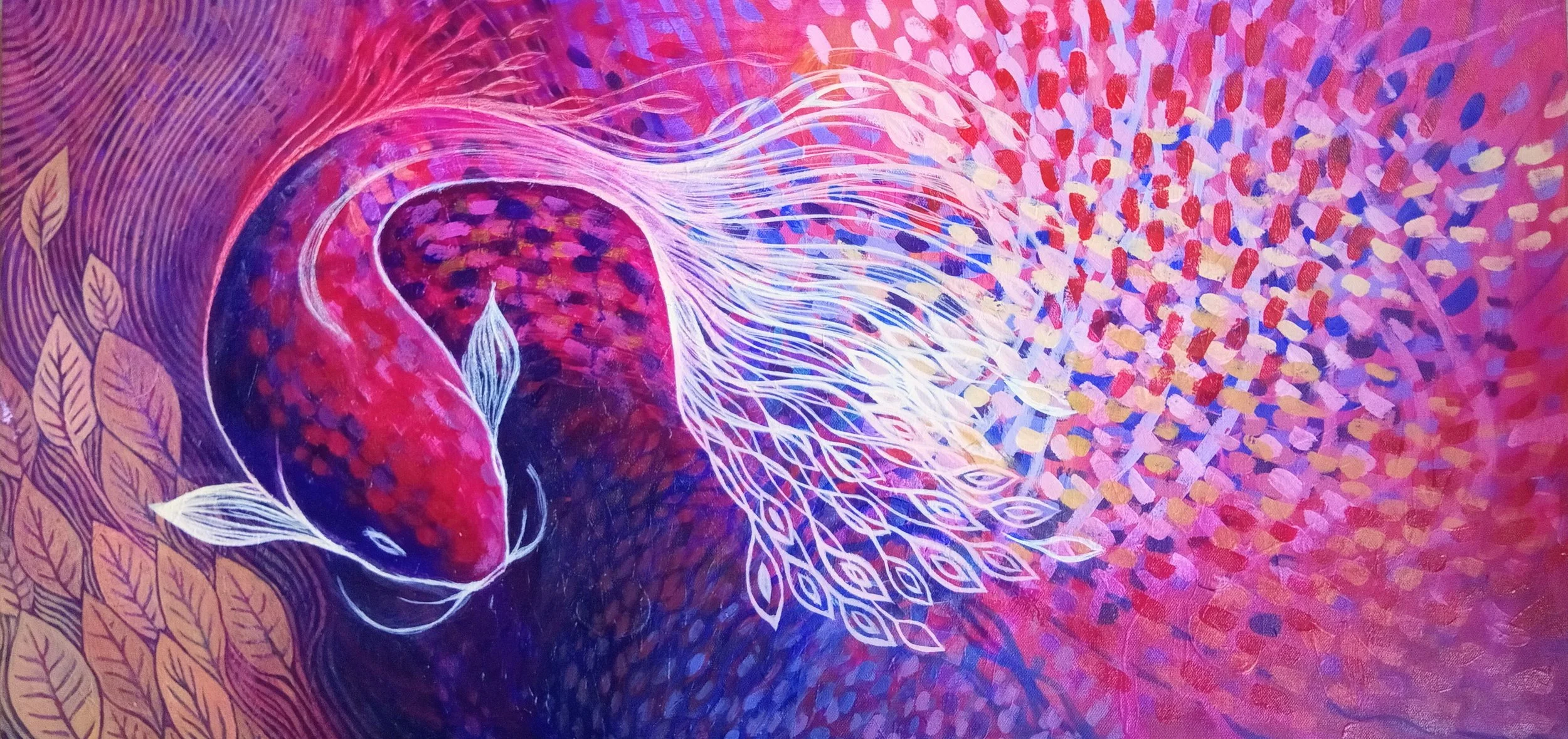
“Kill your darling” is something I learnt at high-school. Ever since i painted Mia throwing her hair back, from my photo reference of her, something did not sit right with me. One rainy afternoon at work, I asked my colleague what she thought about the painting. She instantly saw a “koi” fish in the hair, as if it was a fish tail. I could see what she meant, and it sparked my curiosity. What was this Koi fish, hiding in the lines? After thinking hard about it I decided this was my moment to kill the darling. The darling being the theme of Mia’s backlit silhouette, which had always been something I was not sure about, a starting point, not a defined resolve. I think the commitment to the Koi really changed the whole tension of the painting. I could let it float in the frame, the silhouette at the bottom of the frame felt a bit stuck, as if its anchoring to the bottom stopped the energy flow around the shape. I feel like it can breathe now. The initial starting ideas were exactly that: starting points. This gave something beyond a blank canvas, that my intuition and curiosity could explore. I needed to experience the discomfort and see my intuition as a force worth trusting. For me this insight was the most important part of the process, and made me feel I have grown a bit in confidence.
Step 3 - Finishing:
Step 1 - Developing the idea / Step 2 - Start doing / Step 3 - Finishing
How do you know when a painting is done? This was an exercise in just that. I notice a slight discomfort when i look at the canvas. I guess this is some kind of instinct, or the brain looking for a rhythm or some sort of energy the painting should give. After finding the Koi, I worked and re-worked the background and edges several times. I notice that some areas seemed flat, some too detailed, some too static. The problems never have a set reply, so I have to search with the paint brush. Sometimes I find the answer, sometimes i have to try again. I found the “replies” were good when i was able to let go of control and the “thinking” problem solving, and let the play and flow do the job. It is surprisingly hard to do, the mind so desperately wants to steer the ship and keep the control, but exactly this control I find makes the work stagnant! I have to respond with being happy to dive into it again, making smudges over carefully painted areas, trusting that this will create new marks I can follow. Not ones I am controlling, they are of a more serendipitous nature. I have come to love the word serendipitous.
Today I added the lines on the right side in this way, with some sort of blue seaweed that blends into the tail/light. These are noticeably more dynamic than the more carefully painted ochre leaves on the left. I find this works, as it hints to movement, that the tail is swooshing through water, yet the dynamic parts need the static elements as a contrast. I also like that this area blends into the tail. This seems to become a bit of a way of working for me, one thing blending into another. One thing dissolving, another emerging. I am coming more trusting and unapologetic to what I enjoy expressing.
Did I keep something personal? I found my notes from the start of the process in Step 1, developing the idea: “Mias balancing between her own wants and needs with motherhood, there will always be a tension. For me, that long, strong hair thrown back in this photo represents the energy I see in her. Could this be a place to start?”
I feel like the fish tail, light, and the movement has kept a free and strong energy at the same time as the intentionally painted areas holds it together. Her hair started the process, but it ended up as something else without losing the energy.
The Koi can symbolize “endurance when faced with adversity” (Boksu.com). I can certainly link my friend’s life story to this symbolism. In the end this painting decided what it wanted to be, and the Koi sort of connects the story of what I wanted to express, without being able to really put it into words.